
Errors That Make The 1964 Quarter One of a Kind
At first glance, the 1964 Washington quarter looks ordinary. It was struck in massive numbers, circulated widely, and still appears regularly in silver accumulations. Yet beneath that familiarity hides a narrow group of coins that broke the rules of mass production. Mint-made errors turned select examples of the 1964 silver quarter into pieces that no longer trade on silver weight alone, but on rarity, diagnostics, and collector demand.
The year itself matters. 1964 marked the final issue of U.S. quarters struck in 90% silver before the transition to copper-nickel clad coinage. The United States Mint pushed production hard to meet demand, striking more than 560 million quarters in Philadelphia and over 700 million in Denver. That production pressure created the perfect conditions for mistakes at the die and hub stage.
Most errors did not survive. Many were spent, damaged, or melted for silver. A small fraction escaped intact. Those survivors now sit far above melt value, with prices ranging from a few hundred dollars to five figures when condition and attribution align.
The most important point for collectors is this: these are not random defects. They are repeatable, documented varieties recognized by major references and grading services.
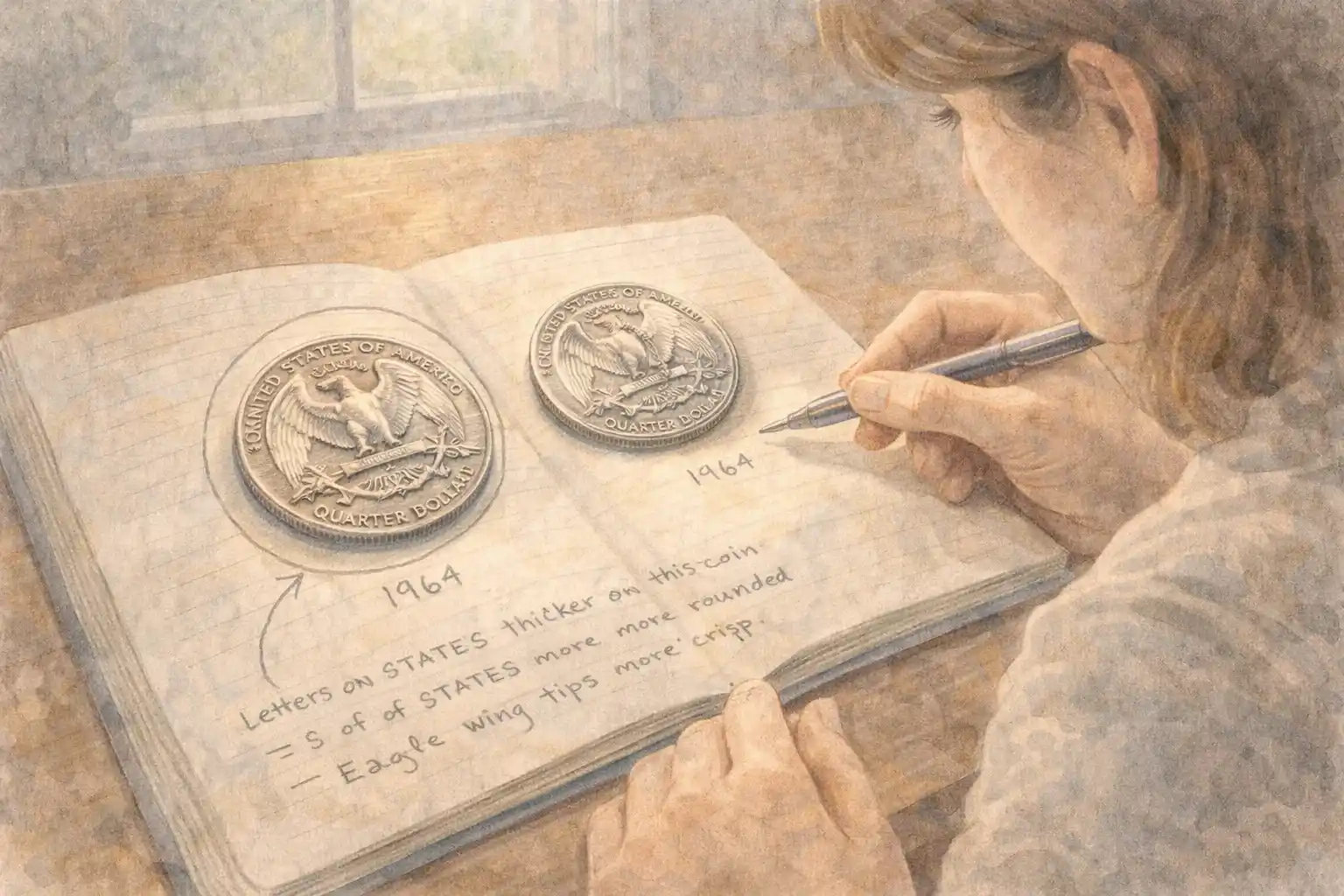
Doubled Die Obverses: When the Design Shifts
Among all 1964 quarter errors, doubled die obverses command the most consistent attention. These occur during the hubbing process, when the die receives more than one misaligned impression from the master hub. The result is true doubling, not strike bounce or machine chatter.
FS-101: The Benchmark Doubled Die
The most widely collected example is the FS-101 Doubled Die Obverse. Its diagnostics are clear and stable:
strong doubling on IN GOD WE TRUST
visible separation on the date
rounded, not flat, secondary impressions
strongest at the ends of letters and serifs
Use the best free coin identifier app to prove your opinion. Under 10× magnification, the offset is unmistakable. Raw examples typically sell between $145 and $250, depending on clarity. In higher grades, prices rise quickly. An MS65 example can exceed $500, driven by scarcity and demand.
Stronger Variants and Why They Matter
Less common doubled die obverses, such as FS-103, show additional doubling in Washington’s profile and nearby devices. These coins are scarcer and visually stronger. Values often exceed $1,000 when the doubling is bold and surfaces remain original.
Collectors pay premiums here for three reasons:
mint-created origin
consistent diagnostics across known examples
third-party recognition in standard variety guides
This separates legitimate doubled dies from exaggerated online claims, and the best coin value app is necessary to support you on your path.
Why Massive Mintages Did Not Prevent Rarity
With over a billion quarters struck, it seems counterintuitive that errors could be scarce. The explanation lies in die usage. A single flawed die may strike thousands of coins, yet only a fraction survive in collectible condition. Circulation, bag handling, and later silver melting removed most evidence.
Errors that remain today often share common traits:
minimal circulation wear
intact luster
no cleaning or alteration
These survival factors matter as much as the error itself.
Before moving to more complex errors like repunched mint marks and reverse varieties, it’s important to understand one rule that governs the entire category: documentation. Errors gain legitimacy only when diagnostics match known references and grading services agree on attribution.
Repunched Mint Marks and Reverse Varieties That Redefined Value
While doubled dies draw broad attention, some of the most dramatic premiums on 1964 quarters come from Denver mint errors. Repunched mint marks and reverse die mismatches turned routine “D” quarters into coins that specialists actively competed for.
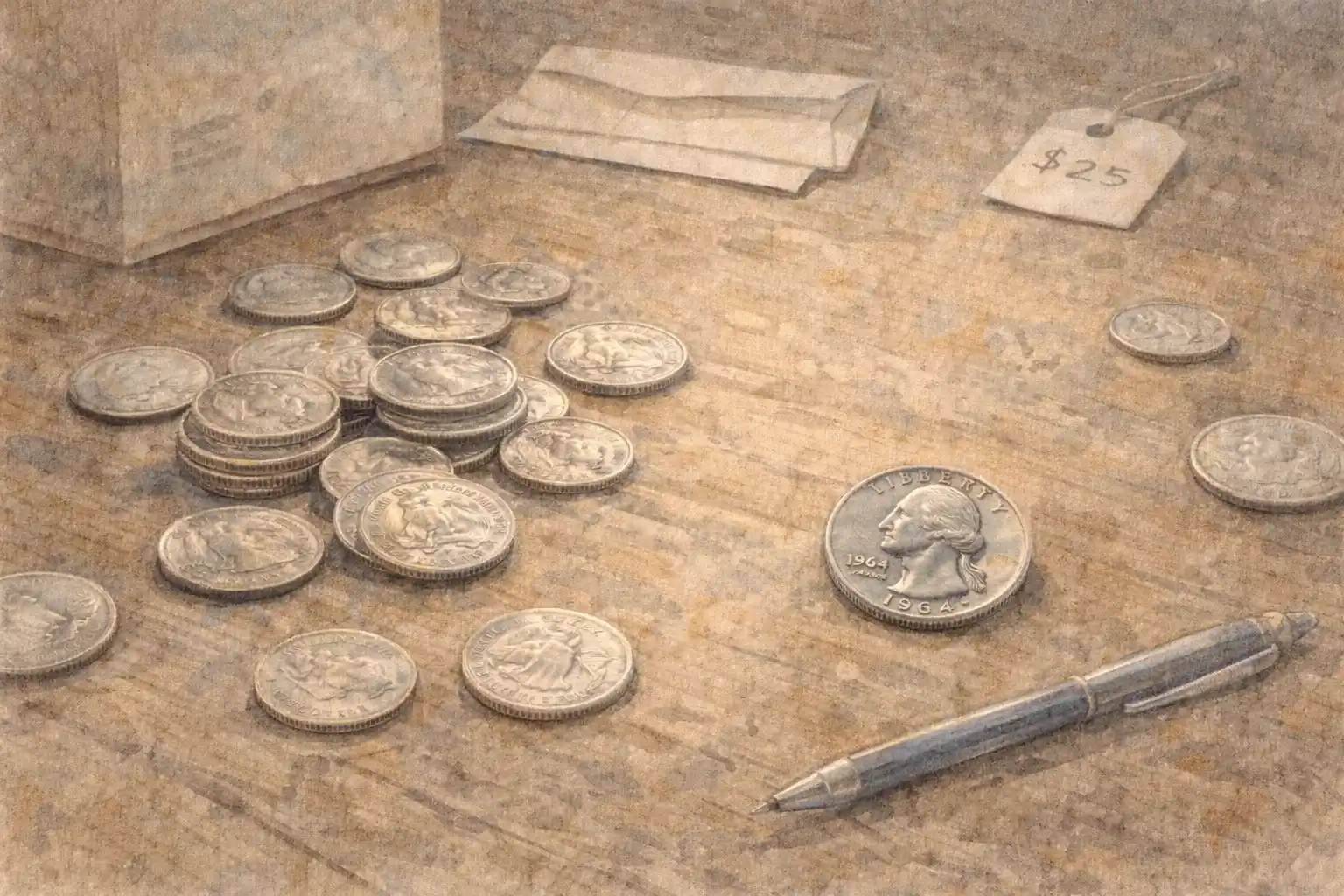
Repunched Mint Marks: Clear Evidence of Die Prep Errors
Repunched mint marks (RPMs) formed during a period when mint marks were added to working dies by hand. If the punch shifted or required a second strike, remnants of the earlier impression remained. In 1964-D quarters, this process created several highly collectible varieties.
The best-known examples are FS-501 and FS-502, both showing a distinct secondary “D” beneath or beside the primary mint mark.
Collectors look for:
a visible “ghost” outline around the D
split or notched serifs
rounded, raised secondary impressions
consistent placement across known specimens
These traits separate genuine RPMs from damage or tooling marks.
RPM Variety | Key Identifier | Typical Value (MS65) |
FS-501 | Strong secondary D | $2,000–$10,000 |
FS-502 | Weaker but distinct overlap | $450–$2,000 |
Values depend heavily on clarity and surface quality. Even lightly circulated examples in AU50 can bring $450 or more, while top uncirculated coins reach into five figures. Certification by Professional Coin Grading Service or Numismatic Guaranty Company is essential at these levels.
Reverse Varieties: When the Back Tells the Story
Not all major errors appear on the obverse. Several 1964 quarters carry unusual reverse dies that collectors actively pursue.
Type B Reverse (Proof Reverse on Business Strike)
The Type B reverse originated from proof dies being paired with circulation strikes. Its diagnostics are subtle but reliable:
clear separation between the “E” and “S” in STATES
sharper lettering overall
slightly different feather definition on the eagle
Once identified, these coins typically sell for $100–$400 in MS65, depending on eye appeal. Because the difference is small, many remain undiscovered in raw accumulations.
Transitional Reverse Mule
An even more unusual pairing appears on some 1964-D quarters struck with a reverse die intended for 1965. These transitional mules represent a brief overlap during the composition change period. While not visually dramatic, their significance lies in timing and documentation.
Raw examples generally start around $140, with premiums increasing after attribution.
Why Verification Matters More Than Ever
RPMs and reverse varieties are among the most frequently misidentified 1964 quarter errors. Machine doubling, damage, and worn dies often mimic real diagnostics. That risk explains why certified examples consistently outperform raw coins.
Before submission, many collectors perform a quick digital check using Coin ID Scanner. A clear photo comparison against known specifications—mint year, diameter, weight, and composition—helps eliminate obvious mismatches and flag candidates worth deeper study.
Repunched mint marks and reverse varieties prove a key lesson: not all valuable errors are bold. Some reward patience, magnification, and careful comparison rather than instant visual impact.
Striking and Planchet Errors: Physical Flaws That Created True Rarities
Beyond hubbing and mint-mark mistakes, some of the most visually distinctive 1964 quarter errors happened at the striking stage. These coins look different at arm’s length, not just under magnification. Their appeal comes from clear mint-made disruption paired with solid diagnostics.
Off-Center Strikes: Misalignment You Can See
Off-center strikes occur when the planchet is not fully seated between the dies. Part of the design misses the strike, leaving a crescent of blank metal. In 1964 quarters, premiums depended on percentage and eye appeal.
10–20% off-center: $50–$150
Higher percentages with full date visible: stronger demand
Rotation adds interest, but visibility of the date matters more
Collectors favor examples that retain readable legends and show no post-mint bending. Clean edges and even metal flow indicate a genuine mint error rather than damage.
Clipped and Wrong-Planchet Errors
Clipped planchets result from improper cutting of the metal strip. Straight clips show clean, linear missing sections; curved clips reflect feeder-finger mistakes. In 1964 quarters, small clips brought modest premiums, while dramatic clips sell faster when surfaces remain original.
Wrong-planchet errors are rarer. A silver quarter struck on dime stock or an undersized planchet creates immediate mismatch in weight and diameter. These pieces often start around $500 and climb with certification and eye appeal.
Die Cracks and Breaks: Raised Lines, Real Errors
Die cracks appear as raised lines, not incuse scratches. On the reverse, cracks through the eagle or rim draw interest; heavy breaks add more.
minor cracks: $20–$100
prominent breaks with continuity: higher premiums
consistency across devices confirms mint origin
Avoid mistaking scratches or corrosion for cracks. Raised metal with rounded edges is the key diagnostic.
Verification, Grading, and Selling Smart
Physical errors invite imitation and mislabeling. Verification protects value. Certification by Professional Coin Grading Service or Numismatic Guaranty Company establishes authenticity and maximizes liquidity. Graded examples outperform raw coins consistently, especially above $100.
For initial screening, many collectors use Coin ID Scanner. Photo checks confirm mint year, weight, diameter, and composition, helping rule out altered coins before submission.
Why These Errors Matter
Striking and planchet errors complete the story of why select 1964 quarters are truly one of a kind. They combine visible disruption, documented mint origin, and survivorship. In a year defined by massive output, these flaws created individuality—and lasting collector value.
Paired with doubled dies and repunched mint marks, they show how pressure, speed, and human processes at the Mint turned a common silver quarter into a standout rarity when everything went slightly wrong.
Blog
-
Indoor vs. Outdoor Grown Cannabis: What Is the Difference?
Explore the definitive guide to the differences between indoor and outdoor grown cannabis, covering quality, benefits, and environmental impacts. Learn how cultivation methods affect cannabinoid poten... -
Importance Of Location Tracking Apps In Cannabis Supply Chain Management
Explore the significance of location tracking in cannabis supply chain management, its benefits, challenges, best practices, and future trends. Discover how GreenHarvestShop leverages innovative techn... -
Hemp vs. Traditional Materials: The Greener Choice for Coin Collectors
Discover why hemp is the eco-friendly choice for coin collectors. Explore its advantages over traditional materials, from coin bags to liners and gloves, and learn how to craft your own sustainable ac... -
$2 Bills FAQ: Value, Rare Series, and Investment Potential
Discover the value, rare series, and investment potential of $2 dollar bills. Learn about Red Seal notes, star notes, signature combinations, and practical tips for collectors seeking authentic and va...